Anyone who has worked with LED lighting knows this problem: the light looks too harsh, uneven, or full of glare. The LED strip may be good, but the final output does not feel professional. That is where lighting diffuser solutions make a real difference.
Whether you are designing commercial spaces, architectural lighting, or industrial systems, choosing the right diffuser profile affects light quality, durability, and overall performance. This guide explains how to choose LED diffuser profiles in a practical way, based on real project needs rather than theory.
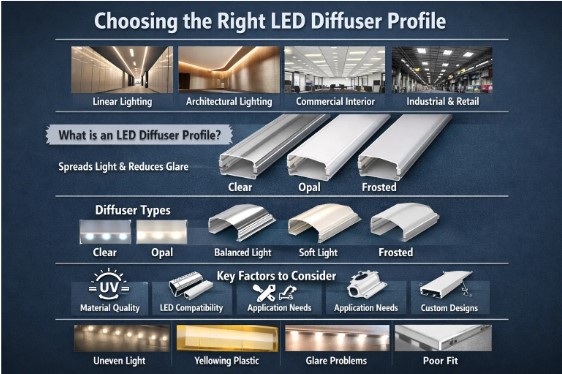
What Is an LED Diffuser Profile?
An LED diffuser profile is a plastic cover or profile used with LED strips to spread light evenly. It reduces glare, protects LED strips, and improves visual comfort.
In simple terms, it turns sharp LED points into smooth, uniform light.
LED diffusers are widely used in:
- Linear lighting systems
- Architectural lighting
- Commercial interiors
- Industrial applications
- Retail and display lighting
Why Choosing the Right LED Diffuser Profile Matters
Many lighting issues come from selecting the wrong diffuser type.
Common problems include:
- Uneven light distribution
- Reduced brightness due to poor material
- Yellowing or ageing of plastic
- Incompatibility with LED strips
- Poor heat dissipation
When you choose LED diffuser profile carefully, you avoid these issues and achieve better lighting results.
Key Factors to Consider When Choosing an LED Diffuser Profile
1) Light transmission and diffusion level
Not all diffusers transmit light in the same way. The level of diffusion affects brightness and uniformity.
Typical options include:
- Clear diffusers: high brightness, low diffusion
- Opal diffusers: balanced brightness and diffusion
- Frosted diffusers: soft light, reduced glare
For most commercial projects, opal diffusers offer the best balance between light output and comfort.
2) Material quality and durability
The quality of plastic used in diffuser profiles directly affects performance.
Good-quality diffusers provide:
- Resistance to UV exposure
- Long-term clarity without yellowing
- Impact resistance
- Stable shape under heat
An experienced LED diffuser manufacturer focuses on material consistency and extrusion precision, which ensures reliable performance in long-term use.
3) Compatibility with LED strips and profiles
LED diffuser profiles must match the size and type of LED strips and aluminium channels.
Check:
- Internal width and height of the profile
- LED strip wattage and heat output
- Mounting method and channel design
A mismatch between diffuser and LED strip can reduce efficiency and lifespan.
4) Application-specific requirements
Different projects require different diffuser designs.
Examples:
- Retail lighting: uniform brightness and visual appeal
- Industrial lighting: durability and protection
- Architectural lighting: aesthetic finish and integration
- Office lighting: glare reduction and comfort
In many modern projects, LED diffuser profiles for linear lighting are preferred because they provide consistent light across long lengths without visible LED points.
5) Customisation and project flexibility
Standard diffusers may not fit all projects. Many lighting systems require unique shapes, sizes, or performance characteristics.
This is where custom LED diffuser profiles become important.
Custom options may include:
- Special cross-sectional designs
- Specific diffusion levels
- Unique lengths and thicknesses
- Compatibility with proprietary lighting systems
Manufacturers such as M3 Extrusion produce diffuser profiles based on technical drawings and project requirements, supporting repeat production and large-scale lighting projects.
Comparison of Common LED Diffuser Types
| Diffuser Type | Light Output | Glare Control | Typical Use |
| Clear | High | Low | Decorative lighting |
| Opal | Medium–High | Medium | Commercial lighting |
| Frosted | Medium | High | Office and residential lighting |
| Prism | Directional | Medium | Architectural lighting |
This table helps clarify how different diffuser types suit different applications.
Practical Steps to Choose the Right LED Diffuser Profile
Step 1: Define your lighting goal
Ask simple questions:
- Do you want soft or bright light?
- Is glare reduction important?
- Is the lighting decorative or functional?
Clear goals make selection easier.
Step 2: Evaluate the environment
Consider:
- Indoor or outdoor use
- Exposure to heat and UV
- Dust or moisture levels
These factors influence material choice and profile design.
Step 3: Check technical specifications
Look at:
- Light transmission percentage
- Material grade
- Heat resistance
- Profile dimensions
These details determine long-term performance.
Step 4: Consider production and supply needs
For commercial and industrial projects, consistency matters.
Check whether the supplier can provide:
- Uniform quality across batches
- Bulk production capability
- Custom profile development
This is especially important for large lighting installations.
Real-World Example from Lighting Projects
In a commercial office project, designers initially used clear diffusers to maximise brightness. However, employees complained about glare and visual discomfort.
After switching to opal diffusers, the lighting became softer and more uniform. Productivity and visual comfort improved without reducing overall brightness significantly.
This example shows how the right diffuser choice affects both aesthetics and functionality.
Key Takeaways for Lighting Professionals
- The right diffuser profile improves light quality and protects LED strips.
- Material quality affects durability and long-term clarity.
- Custom diffuser profiles support unique lighting designs.
- Application-specific selection prevents common lighting problems.
These insights help designers, engineers, and manufacturers make better decisions in lighting projects.
Summary
Choosing the right LED diffuser profile is not just a technical decision. It directly influences light quality, durability, and user experience.
By understanding diffusion levels, material properties, application needs, and customisation options, you can select diffuser profiles that match real project requirements. Whether for commercial, industrial, or architectural lighting, the right diffuser profile ensures consistent and reliable lighting performance over time.
FAQs
1) What is the main purpose of an LED diffuser profile?
An LED diffuser profile spreads light evenly and reduces glare from LED strips. It also protects LEDs from dust and physical damage. By improving light uniformity and comfort, diffuser profiles help achieve professional-looking lighting in commercial, industrial, and architectural applications.
2) How do I choose LED diffuser profile for my project?
To choose LED diffuser profile, consider light diffusion level, material quality, compatibility with LED strips, and application requirements. Evaluate whether you need soft or bright light and check profile dimensions. These factors help ensure the diffuser matches both technical and visual needs.
3) Are custom LED diffuser profiles better than standard ones?
Custom LED diffuser profiles are better when standard options do not match project requirements. They allow specific dimensions, diffusion levels, and design features. For large or specialised lighting projects, custom profiles provide better integration and consistent performance across installations.
4) What role does an LED diffuser manufacturer play in quality?
An LED diffuser manufacturer influences quality through material selection, extrusion precision, and production consistency. Reliable manufacturers ensure stable dimensions, long-term clarity, and uniform diffusion. This is important for projects that require repeat production and consistent lighting performance.
5) Which diffuser type is best for linear lighting systems?
Opal diffusers are often best for linear lighting systems because they balance brightness and glare control. They create smooth, uniform light without visible LED points. However, the best choice depends on application needs, LED strip power, and desired visual effect.
6) Can LED diffuser profiles affect the lifespan of LED strips?
Yes, LED diffuser profiles can affect LED lifespan by protecting strips from dust, moisture, and physical damage. Properly designed profiles also support heat management. Choosing the right diffuser profile helps maintain stable LED performance and extends the overall lifespan of lighting systems.